After a couple of days in Kona, we decided to check out Hilo on the east coast. The best way to get there is by car, but unfortunately the office of the cheapest company we found (Enterprise) was closed in town due to a public holiday. So we caught a taxi to the airport (approx. $30 USD) to pick it up from there. Once we had organised our car (the smallest and cheapest one they had) we took Route 11 so that we could pass though Kilauea Caldera (the most active volcano in the world) on our way to Hilo.
After a couple of hours we arrived at Hawaii Volcanoes National Park and paid $10 USD for our car to get a 7-day pass. If you have enough time, at least 1-2 days would be good to see the park because there are a number of walking and driving trails…unfortunately we only had one afternoon. Crater Rim Drive is the main road that will take you to the main sites, while Chain of Craters Road is a 62km round trip down to the coast and ends where lava has covered 16 km of the road since 1986.
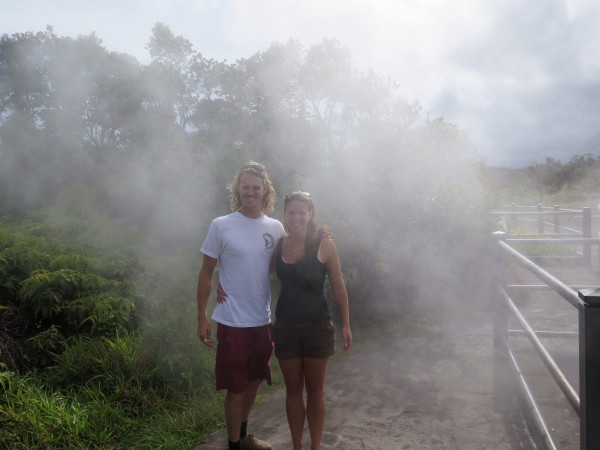
Our first stop off was at the Steam Vents, which from our car just looked like smoke coming up from an invisible fire. When we got out for a closer look though we could stand right near where the steam was coming up from the earth. It was like being in an outside sauna and is actually really hot. They are formed when rain sinks through the ground and reaches hot rocks in the earth, turning into steam it is released into the air.
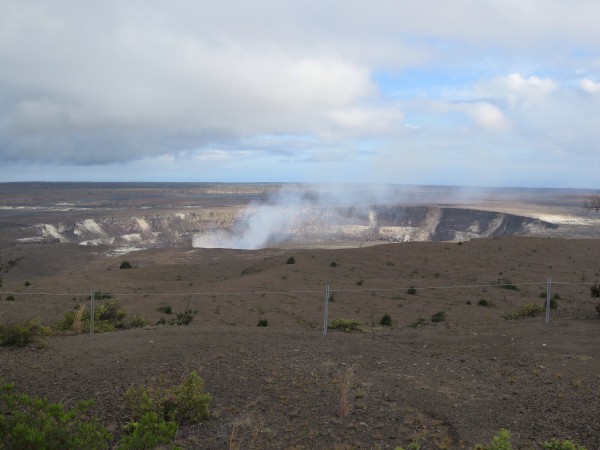
Our second stop off was at the Jagger Museum, which houses instruments to record earth and volcanic changes such as tiltmeters (measures small changes in the ground from the vertical level) and seismographs (measures seismic waves created by earthquakes and volcanoes). The museum is named after Thomas A. Jagger (1871-1953) who was an American volcanologist and director of the Hawaii Volcano Research Association, which set up the Hawaiian Volcano Observatory to monitor Kilauea Caldera. I’m not a die hard volcano fan so didn’t find the museum that interesting, however they do have free tours with knowledgable guides which are a lot more captivating. It was during this tour that we found out why we needed to come back after dark.
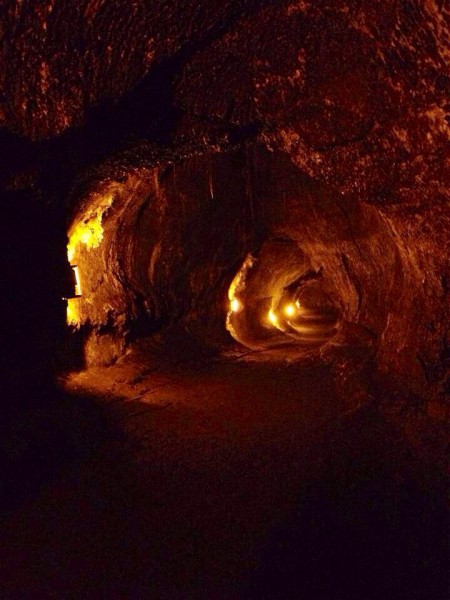
With a bit of time before dark, we decided to check out Thurston Lava Tube on the east side of the volcano. This is a nice 10-15 min loop walk through a rainforest and the lava tube. 500 years ago a lava river was flowing in this exact location, the outer crust hardened but the lava continued to flow through, finally draining out and leaving the hard shell that can be seen today.
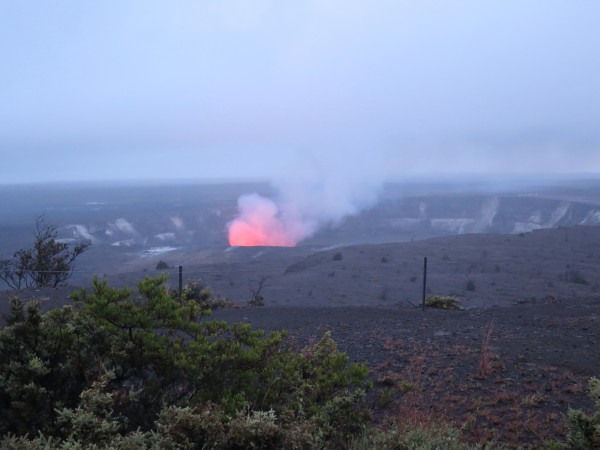
To end our day we returned back to the museum when it was dark to see what all the fuss was about. When we originally heard about the active volcano, I was expecting to see a fountain of lava spurting up into the air, so was slightly disappointed during the day when you can only see the crater. At night it is a completely different experience, as the lava pool which is not visible during the day creates a red glow. It’s not quite as impressive as a lava fountain would be but we were blown-away nonetheless. To top it off I also witnessed my first proposal from a tiny guy to a behemoth woman (she first asked if he was serious but then said yes).

Once we had seen enough of the volcano, we drove to Hilo, put our bags down at the hostel and went out to dinner at Kanpai Hilo. The food was pretty good but it was the staff that really made the place. They were so friendly and helpful, and as locals from Hilo, had lots of recommendations and must-see sights for us. It was on their advice that we based our road trip locations for the next day.
 Every Country