Although quite small and without many tourist attractions, the nicest city in Paraguay would have to be Encarnación. The city runs along the Rio Paraná, where a new promenade with shops and cafés has been built in front of a river beach. Despite the winter weather being quite warm when we were there, I was surprised to see that we were practically the only ones on the beach. As we strolled leisurely along the promenade, we only ran into a handful of other people. I believe summer is a different story, with the beach attracting over 300,000 people each year. Aside from the beach there are two other main attractions that pull tourists to Encarnación:
Jesuit Ruins
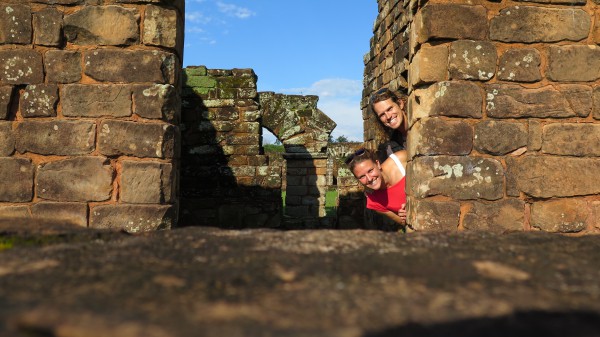
Encarnación is the best place from which to visit the Jesuit Ruins of Trinidad and Jesús, and may be some of the only UNESCO World Heritage Sites where you will be the sole visitor. Sent by King Philip II of Spain, the Jesuits arrived in South America in 1588, with the goal to Christianise and protect the native people from slave labour enforced by the Spanish Conquistadors. The two ruins were part of 30 missions set up in Paraguay, Argentina and Brazil. The Mission of Trinidad was established in 1706 and is the best preserved urban complex. It covers an area of approx. eight hectares and includes a main church as it’s core, a small church, school, cemeteries, kitchen, gardens, houses and workshops. Twelve kilometres down the road are the ruins of Jesús, a Mission which was founded in 1685. Not as well preserved, it has the ruins of its main church, one room of the college, the Plaza Mayor, some houses and cemeteries. Both Missions were self-sufficient ‘towns’ that provided homes for the native people and gave them the opportunity to continue and practice their indigenous traditions. These included, the cultivating and drinking of yerba mate and studying and forming a written version of their local Guaraní language, which up until then had only been oral.

You can catch a bus regularly to Trinidad from Encarnación from 6am – 7pm, but any bus going east along Ruta 6 to Ciudad del Este or Hohenau will drop you near the ruins. Get off when you see the power station on the right and walk 10 – 15 mins down the road adjacent to the main road. Without a car, it’s harder to get to Jesús and you would probably have to pre-organise a cab because the ruins are kind of in the middle of nowhere. There is a little hotel near Trinidad ruins which may be able to arrange one for you.
Carnival
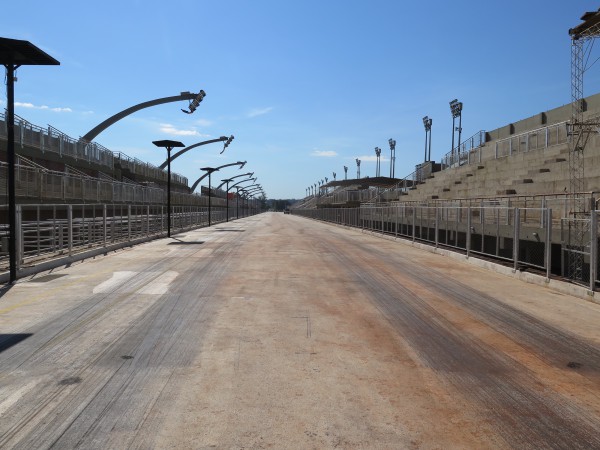
Unlike the ruins which can be visited anytime of the year, Carnival is seasonal. Running every weekend (both Sat and Sun) at the end of January and all of February, it is definitely worth a visit if you are in the area around this time. Scantily clad women dance down the streets, adorned in elaborate costumes of sparkling bikinis, feathers and extravagant headdresses. Following them are giant floats depicting Mayan/Aztec cultures and indigenous motifs and symbols. The main party is held at the beach side Sambadromo, where tickets can be pre-purchased for 50,000G or bought at the door for a slightly higher price. The event goes from 10pm till 2am and then if you still have the energy, ends at dawn in the local clubs. Make sure you bring your lanzanieves (“snow” sprayed from a can) and sunglasses so the snow doesn’t get into your eyes!
Two or three days is enough time for Encarnación and no visit is complete without a stop off at Habib’s restaurant on the corner of Mallorquín and Curupayty, which sell some of the cheapest and delicious kebabs for 12,000G (approx. $3 AUD)!
 Every Country