Antigua Guatemala (or Antigua for short) had a really rough start. Within three years after it was first founded in 1524, it was destroyed by a fire (started by an uprising from the indigenous population) and re-established, only to be buried in an earthquake and avalanche in 1541. Third time lucky, it was moved to a new location and was inaugurated in 1543. Antigua was the former capital and the city was able to survive floods, volcanic eruptions and tremors for the next 230 years until 1773, when an earthquake wiped out majority of the city. A decision was then made to move the capital to a safer location, the current Guatemala City.
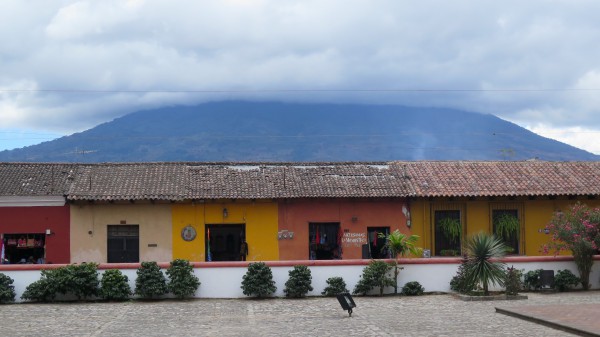
Despite all this, Antigua has to be one of the most beautiful colonial towns in Latin America and is a must-see when visiting Guatemala. It is how I imagined the cities of León and Granada in Nicaragua to be; and while they have some attractive aspects, Antigua is the perfect combination of everything and takes the cake. The town is built in the traditional grid form with cobbled streets, various coloured houses under terracotta roofs with ruins dotted in amongst them. There is also an aspect of natural beauty to the place as it is surrounded by three volcanos; Agua (3766m), Fuego (3763m) and Acatenango (3976m), all of which are climbable. In comparison to the rest of Guatemala, Antigua is expensive, however find out why it can’t be missed when visiting Guatemala.
Spanish Classes
Although we only had four days in Antigua, it would be very easy to spend more time here. Our original plan was to learn Spanish in a homestay for a week as there are more Spanish schools here than you can poke a stick at. Unfortunately, this plan fell through because we fell in love with Lake Atitlan instead and ran out of time, however not before we had put in all the ground work of finding a good Spanish school. We believed the cream of the crop to be Antigüeña Spanish Academy because it was one of the cheapest options, they only hire experienced teachers and it comes highly recommended from a number of sources including travel forums and journalists. In the off-peak season (after Easter) they were going to offer us; $150 USD/person for private one-on-one lessons in the morning, 20 hrs/week, a homestay (7 nights accommodation and 3 meals a day except on Sunday) or $130 USD/person for the same deal but with two people in the class with one teacher. It is possible to have it even cheaper if you take afternoon classes, but then you would miss out on the extra activities that are included in the price that happen in the afternoon (cooking and salsa classes, local market tours).

Outdoor activities
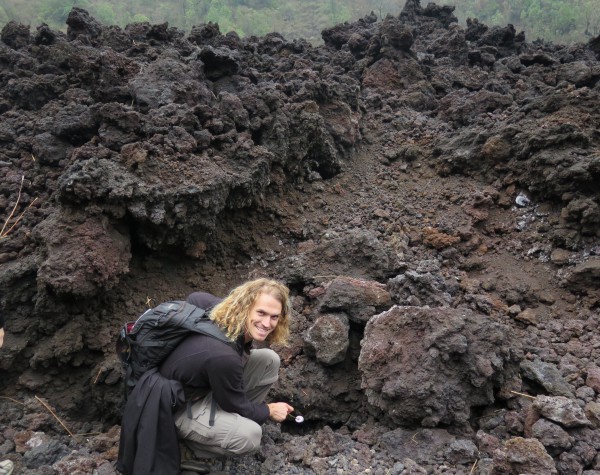
The surrounding volcanos are all climbable and there are lots of tour agencies that can organise hiking, biking, kayaking and horse riding trips for you. We decided on Pacaya volcano, an enjoyable half-day activity but not necessarily a must do. We had been feeling a bit lethargic recently and looking for some exercise, our tour cost 80 quetzals (Q) plus 50Q for the park entrance. They picked us up from our hostel at 6am, we drove an hour to the volcano, walked up a sometimes steep incline for an hour and half, saw the summit (you don’t walk to the summit), visited a shop near the summit (that sells jewellery made from coconut shell and lava and give proceeds to the people who lost their home in the 2010 eruption) and then walked back again. The highlight of the trip was roasting marshmallows near the summit on a hot air vent coming up from between the rocks generated from the heat below the surface!
Antigua Town
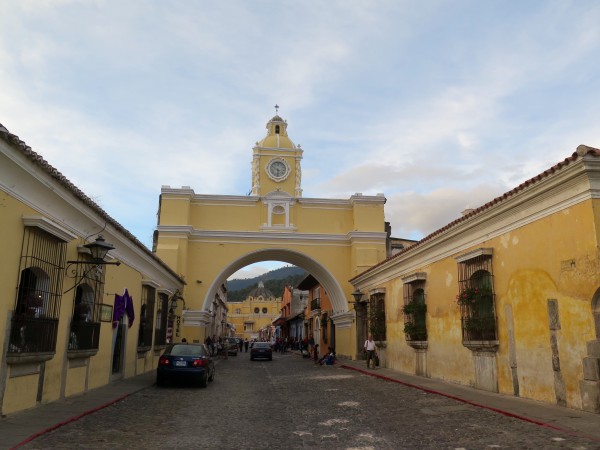
Antigua is a charming town to walk around and explore the ruins amongst the renovated Spanish houses and the beautiful colonial churches. Everything is centred around Parque Central, which is a great place to people watch while enjoying a coffee from Café Condesa (on the west side of the plaza). Every time we went to the park, I almost always ended up buying something handmade from the local Mayan ladies who would walked around. It was usually when they put in a bit of ground work and sat down with us, asking about our travels and what Australia was like. Just as they would get up and leave, they would offhandedly ask us to buy something and it’s hard to refuse after we have been chatting for 15 mins! For more souvenir buying the Mercado de Artesanias has a crazy amount of shops selling Guatemalan handicrafts and for everything else you can find it at the main market. Both of these are located near the bus terminal on 4a Calle Poniente.
First visit
Juayúa to Antigua: We started our day on a 7am chicken bus from Juayúa to Ahuachapán (1-1.5 hrs) which come every 20-30 minutes. From Ahuachapán, we caught a minibus from 8a Calle Poniente, at the northwest corner of Parque Menéndez to Las Chinamas (40mins – 1hr) on the border of El Salvador and Guatemala. We signed out of El Salvador, walked across the bridge and up a hill to sign into Guatemala and then caught a chicken bus to Guatemala City (3 – 4hrs). We ended up in the middle of a deserted industrial area so took a taxi straight to the Pullman Antigua bus terminal and finished off with a 45min bus journey to Antigua. It was a long day!
Antigua to Lake Atitlan: Originally the plan was to catch a chicken bus from Antigua to Chimaltenango, change and then catch another one to Panajachel. However we ran into a tour group who were heading the same way and decided to tag along. Sometimes it’s nice to stop thinking about logistics and let someone else do the work, because we assumed the leader would know the way. It wasn’t until our third chicken bus that we realised the leader was from Mexico and had only made this journey a couple of times. We got there in the end but it took four buses; changing at Chimaltenango, Los Encuentros and Sololá (I think), four hours and cost about 50Q. I don’t recommend this! From Pana we then caught a boat for 25Q to San Pedro.
Second visit
Lake Atitlan to Antigua: After the trouble of getting to the lake we decided to give the chicken buses a miss and catch our first shuttle in Central America instead. Booked from a travel agency in San Marcos, it cost 80Q, they picked us up from the town centre and it took just over two hours. The whole process was a lot simpler and easier and cost roughly the same price!
Antigua to Copán: From Antigua, we decided to treat ourselves to our second shuttle in Central America that we booked from a local tour agency. It cost $20 USD, picked us up at 4am and was quite a pleasant six hour trip despite encountering some road work that made the trip longer. It is possible to make the trip on chicken buses but it takes eight to nine hours and you have to change a number of times.
 Every Country